


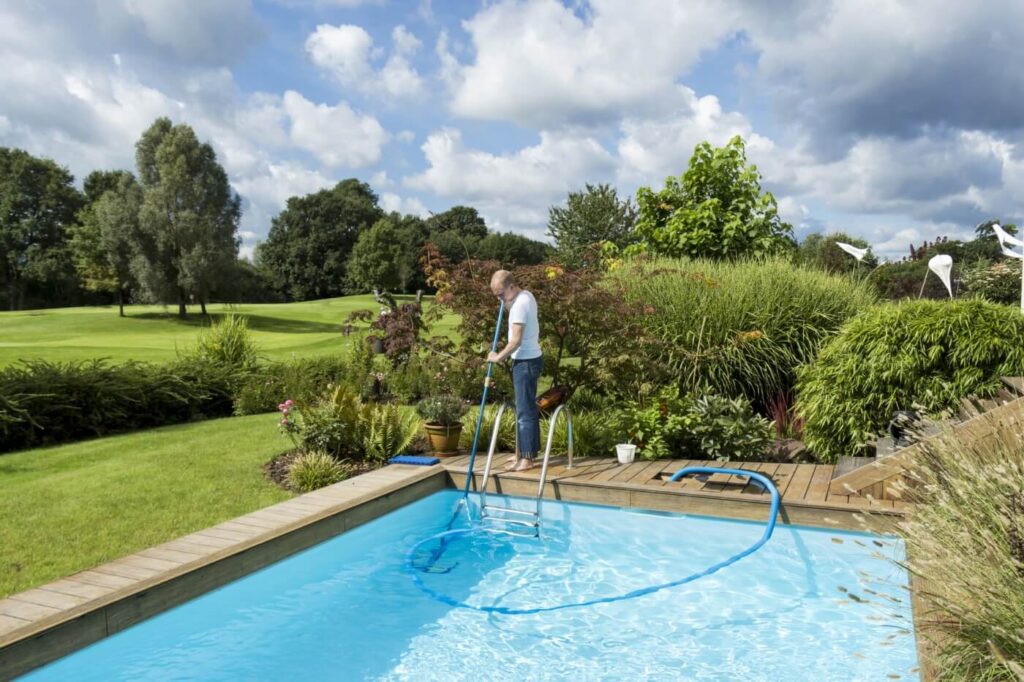
It makes little difference if you live at home with a pool or a small pool in your private garden: both places are busy and fun, but others want to take the mickey out of you. Owning a pool means not only enjoying luxury and relaxation in an oasis of peace, but also taking on the responsibility of care; however, this must comply with environmental cleanliness rules. A comprehensive checklist provides a sound management strategy for addressing excess algae and icy water conditions, ensuring the health and well-being of all swimmers. This guide offers an introduction to pool service, which can be a source of natural water that is always inviting.
Regular Cleaning Routine
A clean pool must be kept well-maintained by following a consistent daily routine. By strategically clearing the water surface of leaves and debris (dead insects, for instance) every morning, it becomes much easier to skim and rake once you get around to it. Brushing the walls and concessions to the whales once a week prevents algae from building up. A vacuum cleaner also cleans up dirt particles that are difficult to reach with human hands. Choosing expert pool service in Sanford, FL, ensures that pools remain free of algae, bacteria, and damage caused by storms or neglect.
The pool filter is vital to these efforts. It needs to be periodically backwashed or the filter cleaned, depending on its type. A clean filter allows the circulation system to adapt to varying water clarity.
Water Chemistry Balance
Correct water chemistry is crucial if the pool is to be used safely. Test the water at least once a week to ensure that the pH, alkalinity, and calcium hardness levels are all within the proper range. A well-balanced pool won’t irritate swimmers; in fact, it makes them feel refreshed after such lengthy swims and even helps maintain the pool’s structure.
Chlorine is essential for cleaning water. It is important to test the level for regular compliance within proper margins. Adding a chlorine stabilizer allows you to maintain its effectiveness, especially on those sunny days.
Equipment Inspection
Routine equipment checks are important. Pumps, heaters, and filters should be inspected for use and damage. Pools that Generate Income are taking an increasingly important place in our leisure activities, as costs continue to rise. If you notice unusual engine sounds or discover liquid or water on any nearby flat surface, proceed immediately to prevent minor problems from becoming major ones.
Moreover, the pool’s automatic systems, including controllers and timers, must function adequately. When these components function correctly, you ensure the proper and smooth operation of your swimming pool.
Safety Precautions
Above all, safety must have the highest priority in enjoying a pool. Fencing the pool area can prevent accidental trespasses, particularly by children or animals. Gates should be in operation with secure locks, and safety covers provide added peace of mind when the pool is not in use.
To ensure safety in pools, essential equipment should be readily available. Rescue hooks, life rings, and a first aid kit should be readily available. Clear signs for depth and any general regulations can also help make swimming safer.
Seasonal Work
Different seasons bring different problems. In the spring, opening the pool involves cleaning and getting it back into working order. Here, we need to remove the covers, inspect the equipment, and adjust the chemical balance.
With its increased use during the summer, the pool needs more frequent balancing and cleaning. Regular monitoring will keep the pool looking good and ensure it remains safe for swimming.
Autumn means clearing away the fall leaves. Regular cleanup prevents clogging and discoloration. As winter approached, closing the pool involved thorough cleaning, adjusting chemical levels, and covering it.
Professional Help
Reliable maintenance can be undertaken singly, but professional help provides reassurance. Pool specialists can carry out rigorous testing and apply advanced cleaning procedures. They spot potential problems early, saving you time and money in the long run.
Hiring professionals for the spring and winter openings and closings can simplify things. They can accomplish all the tasks with a minimum of fumbling, while you simply enjoy the experience.
Energy Saving Tips
Energy-efficient practices mean both savings for you and consideration for the environment. A pool cover, used when the pool is not in use, helps reduce heat loss and evaporation. It almost eliminates heating costs.
Energy-efficient pumps and lighting further reduce expenses. These selections not only save energy but also contribute to the prolonged life spans of the machines involved, which is good news in the long run.
Conclusion
Good pool maintenance requires paying careful attention to detail and considering the entire picture. With a list like this, you can rest easy all year round in those cool and safe swimming pools. Regular cleaning, maintaining balanced water chemistry, and safeguarding every step are key to the editorial maintenance of pools, which serves as the foundation. You can keep the pool as your own pleasant retreat forever, for this is one thing anyone can manage on their own with a bit of effort.





+ There are no comments
Add yours